
Writing ·
The Five Aggregates / The Buddhist Skandhas
The Five Skandhas, or aggregates, are a fundamental concept in Buddhism, particularly within the Mahayana tradition. They describe the components, or processes, that make up a sentient being. They are often used to teach the non-self (Anatta) nature of beings: what I take to be a “self” is a collection of temporary, changing processes with no inherent, permanent essence in it. What I want to do here is tell the Five Skandhas through traditional Mahayana parables and teachings, and let the stories carry the concepts, since that is how I understand them best.
The Parable of the Chariot
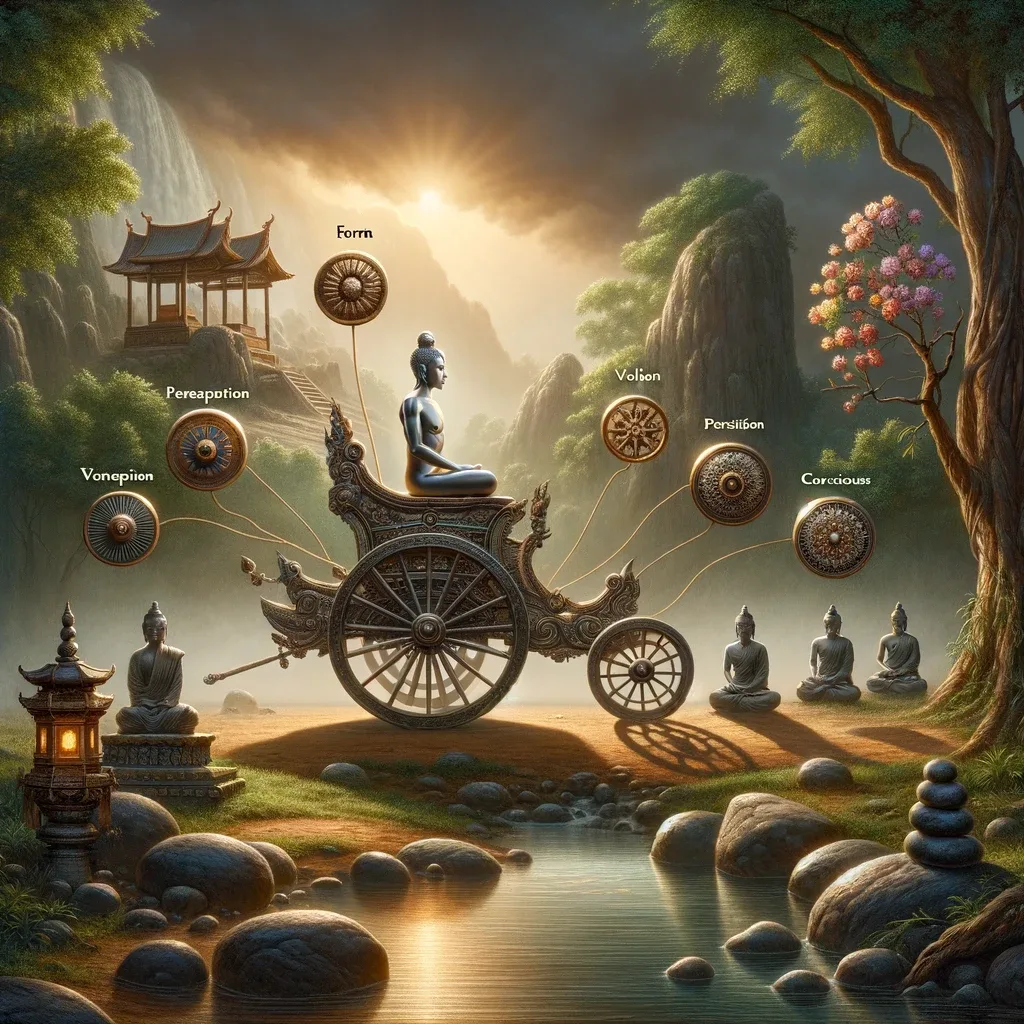
In the ancient texts the Buddha teaches the non-self nature of beings by comparing a person to a chariot. A chariot is made of parts, wheels, axle, frame, and so on, and it cannot be found to exist apart from those parts. In the same way a person is made of the Five Skandhas:
- Form (Rūpa): The physical aspect, like the wheels and frame of the chariot. Our body and its physical sensations.
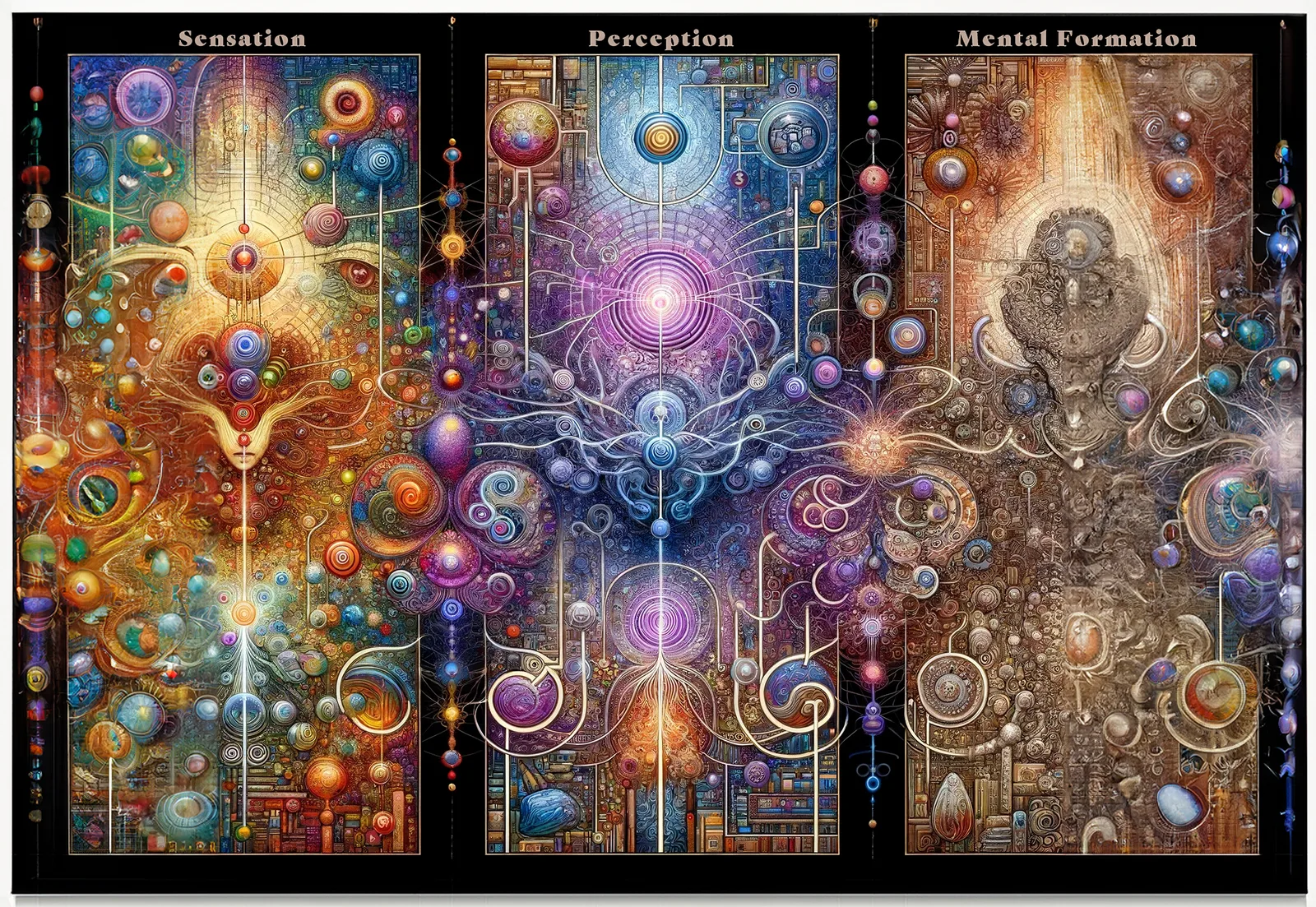
- Sensation (Vedanā): The feelings or sensations that arise from meeting the physical world, like the comfort or discomfort one feels riding in the chariot.
- Perception (Saṃjñā): Recognizing and labeling what is experienced, the way one picks out the parts of the chariot and what each is for.
- Mental Formations (Saṃskāra): Volitional or intentional action, comparable to the decision to assemble the chariot and drive it somewhere.
- Consciousness (Vijñāna): Awareness of sensory and mental experience, like the consciousness that oversees the chariot’s journey and takes in all of it.
The parable ends where it began: the “chariot” exists only as a combination of its parts, not as an independent thing in itself, and in the same way the “self” exists only as a combination of the Five Skandhas, with no inherent essence.
The Parable of the Burning House
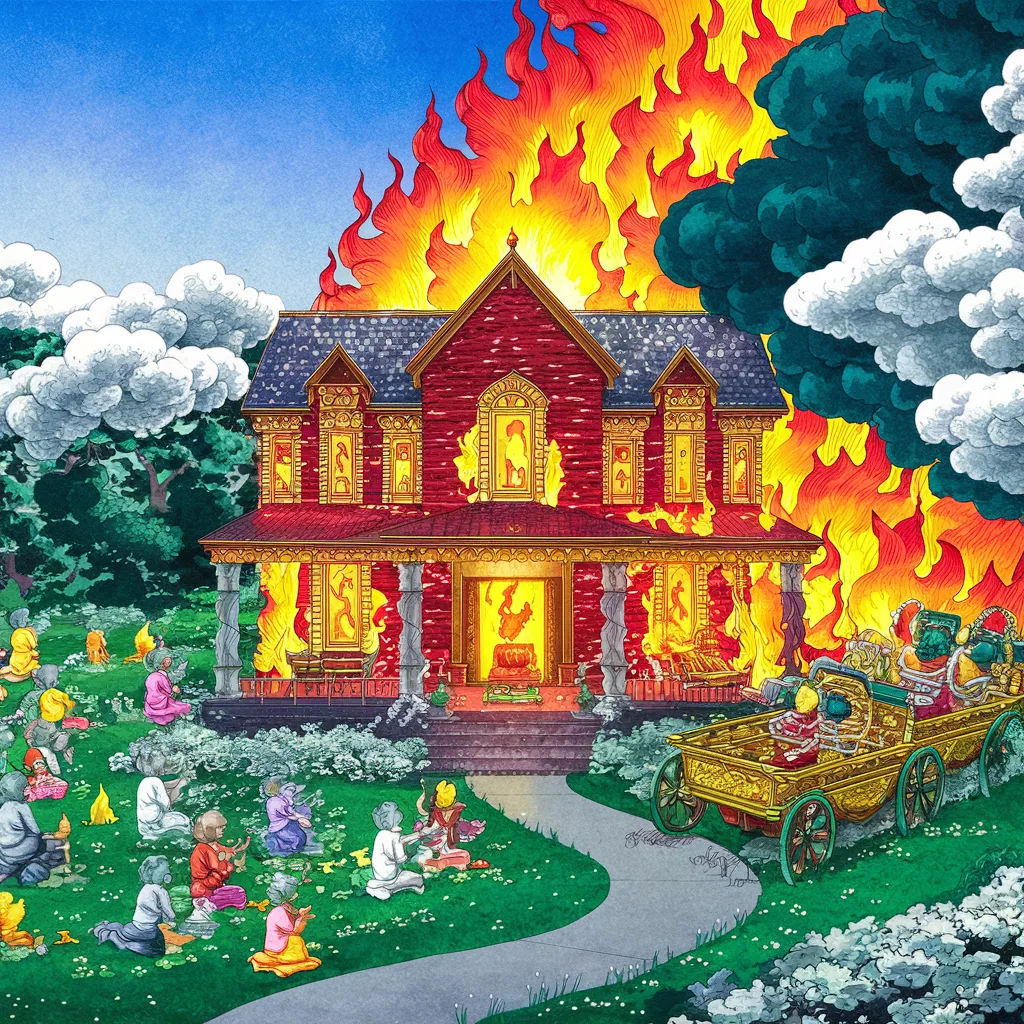
This parable, from the Lotus Sutra, touches the Skandhas indirectly, by showing the delusions that keep beings in the cycle of suffering. A wealthy man’s house is on fire, but his children, absorbed in their games, pay no attention to his warnings. To save them he promises magnificent carts (standing for different paths to enlightenment) if they will only leave the house. They do, and escape the danger.
The burning house is the world aflame with the suffering that arises from the Skandhas. The children’s attachment to their games is our attachment to sensory pleasure and experience (Form, Sensation, Perception), and their ignorance of the danger is our unawareness of the suffering that comes from clinging to these aggregates. The father’s skillful means (upāya) in getting the children out of the house is the Buddha’s teaching, which leads beings away from attachment to the Skandhas and toward liberation.
The Parable of the Raft
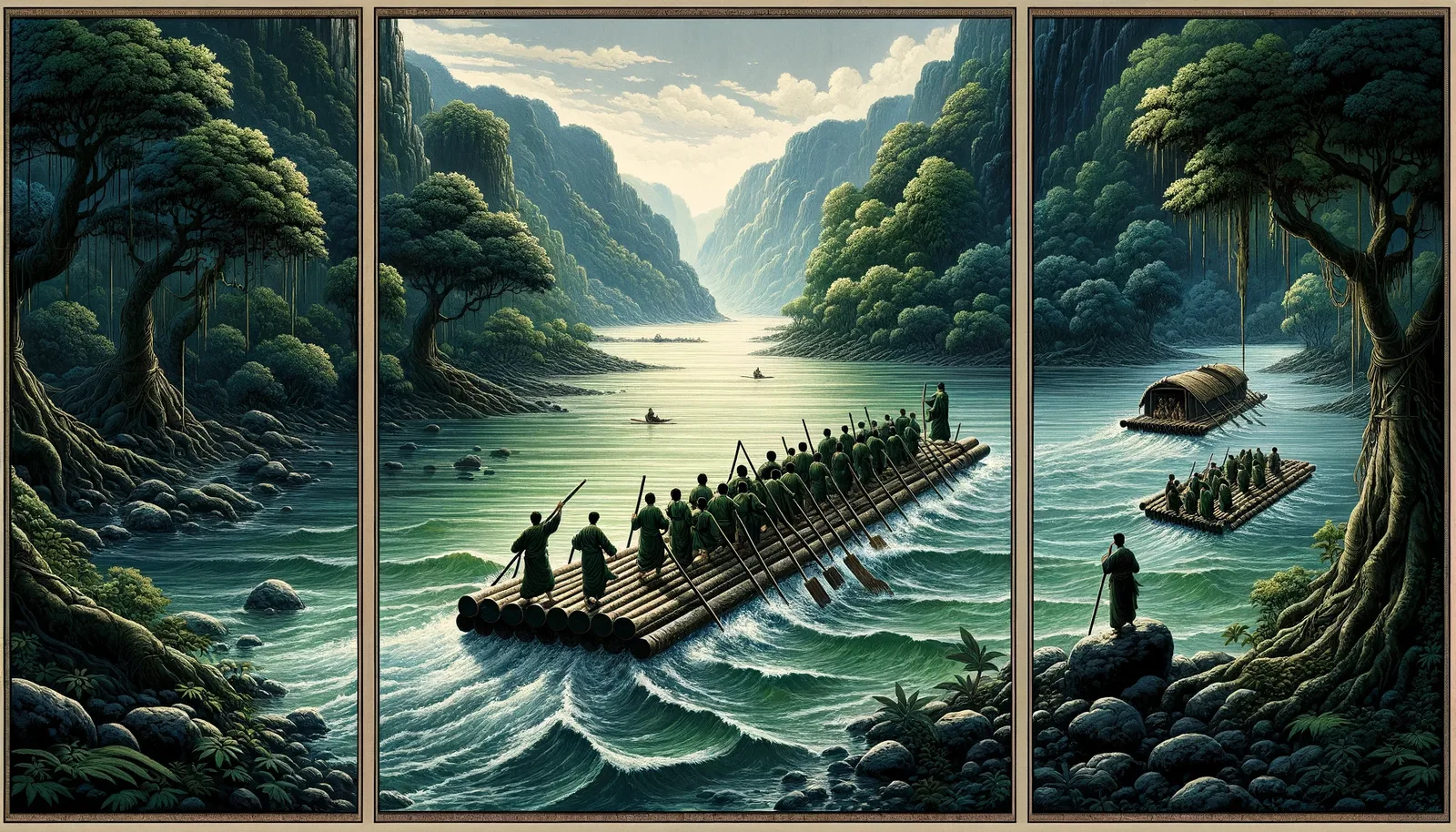
Here the Buddha compares his teachings (the Dharma) to a raft used to cross a river. Once the river is crossed the raft is no longer needed. It should be left behind, not carried along.
I read this parable as a teaching about the use, and the eventual release, of the Skandhas. As the raft is a tool for crossing the river, the Skandhas are tools for experiencing the world and practicing the Dharma. Attachment to the raft (the Skandhas) after it has served its purpose is unnecessary and a burden. The practitioner is to use the Skandhas in practice without becoming attached to them, and in the end to let them go, to realize the nature of emptiness and reach enlightenment.
Through these parables Mahayana Buddhism teaches profound lessons on the nature of self, the process of awakening, and the path to liberation, and it carries the complicated teaching of the Five Skandhas in stories that anyone can pick up and hold.

First published on temnoon.com. Re-voiced from that original, in the Tem Noon Voice persona (9497f2d0) on 2026-10-11; the original is kept in the archive.