
Writing ·
10,000 Sentences A Day
The Daily Limit of Sentences: Understanding Cognitive Capacity and Its Implications
Introduction
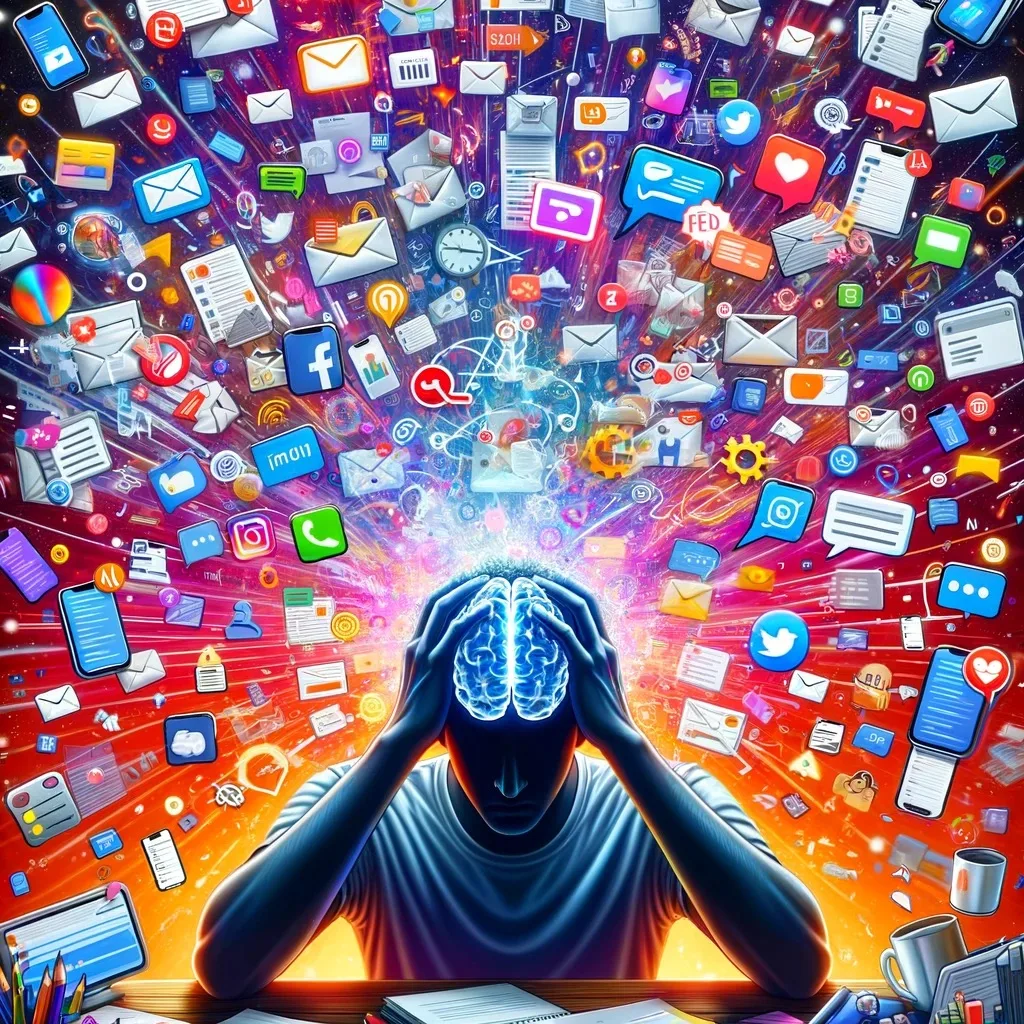
Have you ever reached the end of a day feeling that you simply couldn’t take in one more thing? Emails, texts, the notifications from social media, the conversations that wanted an answer, all of it pulling at your attention until you were worn out. I don’t think this is only a modern annoyance. I want to consider that it comes from a real limit in us. The idea I keep returning to is that a person can take in and put out only so many sentences in a day, whether they are heard, spoken, read, written, or merely thought. In what follows I’ll look at what the science has to say about that limit, and then at what it does to the ordinary business of living: learning, getting work done, being with other people, even the choice of a career. Along the way I’ll offer what I have found useful for carrying the load.
The Science Behind Sentence Processing Limits
Cognitive Load Theory
Cognitive psychology has a name for the thing I am circling: cognitive load. The phrase refers to the amount of mental effort, and the amount of working memory, that it takes to process a new piece of information and hold on to it. When that load gets too high, we stop learning and we stop retaining. The theory sorts the load into three kinds:
- Intrinsic Cognitive Load: The inherent complexity of the material being learned.
- Extraneous Cognitive Load: Unnecessary distractions and interruptions that can interfere with learning.
- Germane Cognitive Load: The mental effort required to process and retain new information.
The literature says that when germane load becomes excessive the result is what gets called “cognitive overload,” and learning and memory both suffer. I take that as a hint that there is a natural ceiling on how much new material any of us can process and keep at one time.
Research Findings
People have looked for this ceiling. The general picture is that an average person can handle only so much that is new before overload sets in. There is a paper in the Journal of Experimental Psychology reporting that too much information leads to poorer memory and poorer comprehension. Another, in Memory & Cognition, reports that the more items a person is asked to remember, the worse the performance gets. I read these as pointing at a real, countable limit on the sentences a day can hold, a limit set by load and by effort rather than by will.
The Role of Time in Cognitive Processing
Time is the other side of the limit. What a moment holds is shaped by what I chose to read, watch, or listen to in that moment, and there have never been more things on offer. One common answer is to do two at once: run a video with the captions on while listening to something else, and call it saving time. But everything I have read on multitasking says it raises the load and lowers the output. The brain doesn’t do two things; it switches, and each switch has a price. The literature calls these “task switching costs,” and they add up to less getting done.
Worse, while switching, the brain never fully settles on either thing, so less of what passes through is processed and less of it is kept. On reflection, that is the whole argument for choosing carefully what gets my attention, and for treating the hours of a day as something to be spent with intention rather than filled.
Sentences as Marketable Commodities
There is another reason the day fills up. The sentences I take in, and the attention I pay them, are for sale. Companies follow what I do online, the words I type and the sites I visit, and they assemble a profile from it. The profile is then turned into money, in the form of advertising aimed at me. The whole arrangement depends on getting more of my attention, and so the demand for it never slackens, which is exactly the condition under which overload sets in and thinking clearly gets hard.
I find it helps to see this plainly. If the sentences are a commodity, then I am the one paying, and what I pay with is the limited capacity I have for the day. Being choosy about what I read and about how I engage with what is on the screen is not fussiness. It is the only way I know to keep room for what I actually want to take in and keep.
Implications for Daily Life
Learning and Retention
The first place the limit shows up is in learning. If you are a student, or you work in a field where the job is largely to keep absorbing new material, then hitting the ceiling partway through the day means the rest of the day’s reading goes in and straight out again. Knowing the ceiling is there changes how I arrange my own study and work: what goes first, what waits, what I don’t even try to take in today.
Productivity and Efficiency
It also shows up in how long things take. Once overload sets in, every task slows down, and the slowing is the sign of a full vessel. The practical response is the unglamorous one: manage the hours, decide what matters most, and do that while there is still room for it. That holds at the desk, and it holds at home.
Relationships and Social Interactions
And it shows up with other people. A conversation is sentences too, and if the day’s allotment has been spent on screens by evening, there is little left for the person across the table. Being mindful of that, and leaving some of the day unspent so that there is something to give to the people I care about, is the only remedy I know.
Long-Term Implications
Career Choices and Opportunities
Over years, the limit shapes bigger choices. Some fields ask for continuous, heavy learning, and for a person who already lives near the ceiling those fields will be harder than they look from outside. I say this not to discourage anyone but because knowing one’s own capacity is a better guide than the brochure, and it can point toward work that fits the mind one actually has.
Personal Growth and Development
What I call growing, as a person, depends on the same thing: taking in what is new and keeping it. Overload shuts that down, quietly, and the shutting down looks from the inside like being stuck. Keeping the load manageable is what keeps the door open to going on learning, year after year, and that feeds the satisfaction of a life.
Life Satisfaction
Which brings me to satisfaction, the plainest word I have for it. A day spent over the limit tends to end in frustration and a vague sense of nothing having been fulfilled. Understanding where the limit is, and living inside it, leaves room for the things that actually feel worth doing, and for following an interest far enough to get somewhere with it.
Strategies for Managing Cognitive Load
Prioritizing Tasks and Information
The first strategy is the oldest: decide what comes first. The most important things, and the ones that cannot wait, get the fresh part of the day, when there is still capacity to spare. Everything else takes its turn afterward, if there is room, and if there isn’t, it waits for tomorrow.
Reducing Cognitive Load
The second is to lower the load itself. Regular breaks do this; the brain rests and recovers in the gaps, not during the work. So do memory aids, which let me set a thing down instead of carrying it, and find it again when I need it.
Mindfulness and Mental Health Practices
The third is practice, in the contemplative sense. Mindfulness, and the other things people do for the health of the mind, lower stress, and a less stressed mind works better. Meditation in particular steadies attention, which is the faculty the whole load falls on. It is a discipline, not a trick, and its reward is a day more fully lived.
So far this is the sensible part. There is a limit; it shapes the days and the years; and three ordinary habits, putting first things first, lightening the load, and sitting still, keep most of us inside it most of the time. What I want to consider next is why language in particular should weigh so much.
Language Processing and the Many States of the Brain
The brain is not one thing doing one thing. It has regions that specialize, in language, in knowing where the body is in space, in moving the body, and the question of how language sits among those other activities matters for what I am trying to say about its limits. The Department of Brain and Cognitive Sciences at the Massachusetts Institute of Technology (MIT) has done a great deal of work on this, and the finding that struck me is that language processing is a highly specific state of mind. It is not the same state the brain is in when the visuo-motor cortex is at work, or when the primary sensory systems are. It is its own mode.
Differentiating Language Processing from Other Brain States
The language work happens mostly in a few named places: Broca’s area, Wernicke’s area, and the angular gyrus, all of them in the left hemisphere. Broca’s area is tied to producing speech and to comprehending language. Wernicke’s area is the one you need in order to understand what is said and what is written. The angular gyrus takes part in the more complex language functions, reading and writing among them. Together they make sentences and take them apart.
Set beside those, the visuo-motor cortex, which takes in the primary motor cortex and the occipital lobes, is doing something else altogether: keeping track of space and coordinating movement. The primary motor cortex handles the voluntary movement of the muscles; the occipital lobes handle what comes in through the eyes. These parts work without reference to the language centers. That independence is the point. Language is one state among many that a brain can be in.
The Role of Agency in Language Processing
Here is what I think is peculiar about language. It is built to move human agency. Other cognitive functions act on the physical world directly. Language acts in the corporeal world only by way of a person who is willing to act. A text, a spoken word, a sentence on a page, none of them does anything until somebody takes it in, interprets it, and does something because of it. In this sense language is the most powerful instrument we have for shaping what people think, what they do, and how they are with one another, and it works entirely through the consent of the one who reads or listens.
Once I put the number on it, a limit of around 10,000 sentences a day, the need for care becomes obvious. Every one of those sentences, whether I think it, say it, read it, or write it, engages my agency in the physical world. Each one makes a small claim on what I will do. And the sum of them, day after day, is a large part of what I experience as myself. That is how deeply language reaches into identity.
The Subjective Experience of Language
My subjective world is tied to the sentences that pass through it. When I think about who I am, most of that thinking is done in sentences, in little narratives put together out of what has happened to me and what has passed between me and other people. Those narratives are made of borrowed material. The words I have heard and read shape the story I tell about myself, and the story shapes what I take the world to be.
Consider what runs through the mind in a room full of people. Most of us are measuring ourselves against what we suppose others think of us, keeping up an inner commentary on where we stand. That commentary is built out of sentences we took in long ago and have been repeating ever since. It becomes hard to tell the self from the language used to describe the self; the two have grown together.
I suspect that if I spent less of the day inside language and more of it in direct contact with the physical world, the sense of self would loosen its grip a little. Walking, meditating, the practices of mindfulness, anything that doesn’t run on sentences, turns attention away from the idiosyncratic social contract that is written into the language and toward the world as it is actually met.
Agency and Self-Image
Language doesn’t just build the self-image once and leave it. It keeps it in repair, every day, through repetition. The sentences I meet on social media, in conversation, in the monologue that runs in my own head, all press the same shape onto how I see myself and where I think I belong. And the shape is not mine alone. The norms of the society I live in arrive the same way, as sentences, and they are kept alive by being said again.
When I hold that beside the limit of around 10,000 sentences a day, I begin to see how much of my capacity goes simply to maintaining these stories. That is sobering, but it is also an opening. If the allotment is finite, then I can look at which sentences are spending it, ask whether they deserve to, and change my dealings with language so that it serves my well-being better than it has.
To be clear about what I have argued in this section: the limit on sentences matters because language is a specific state of the brain, with its own regions, distinct from the states that handle seeing and moving. It matters because language works through agency, so that every sentence is a small act, and the acts accumulate into a self. And it matters because, knowing that, I can be more deliberate about the sentences I let in.
Collaborative Actions and Non-Linguistic Community Interactions
Language is the loudest way we have of being together, but it isn’t the only one. Art, music, dance, and the other arts of the body let people act together without running everything through the language centers. They reach a deeper, more intuitive level than words do: shared feeling, shared timing, the sense of being in something with others that doesn’t need to be said.
The Nature of Collaborative Actions
What dancers and musicians do together is synchronized effort toward a shared intention. The skills involved are not the skills of language. They run on the visuo-motor cortex, the auditory cortex, and the sensory-motor pathways that connect them. In a dance, each dancer is tuning their movement to the others and to the rhythm, and what comes of it is a single expression made of many bodies. That requires a fine awareness of one’s own body and an equally fine awareness of everyone else’s, and out of that awareness comes a feeling of being one thing with a common purpose.
A musical ensemble is the same discipline in sound. Each player listens to the rest, feels the change coming before it arrives, and adjusts to fit the whole. The attentiveness required is intense, and so is the responsiveness, and both bind the players to one another in something like mutual support. Both are lived entirely in the present. They ask for presence and give connection, without the cost in sentences that language exacts.
Benefits of Non-Linguistic Collaborative Activities
Seen beside the limit I began with, these arts offer something simple: rest. Not idleness, but a different kind of work, which the brain does with different parts of itself. While the body is dancing or the hands are playing, the sentence-making machinery gets a break, and the overload drains off. I would put the benefits this way:
Enhanced Social Bonding: Doing something together without words makes people feel they belong to each other. The bonds formed in a dance group or a band come from shared experience and the plain fact of cooperation, and a community held together that way tends to hold.
Improved Mental Health: Artistic and physical activity has been found to lower stress, anxiety, and depression. These activities pull attention into the present, and being present lightens the burden of endless linguistic processing.
Creativity and Self-Expression: There are feelings and ideas that can be put into movement, sound, or paint and cannot be put into sentences at all. Having a way to express those brings a kind of fulfillment that words don’t reach, and a better acquaintance with oneself and with others.
Cognitive and Physical Benefits: Dance and music demand coordination, rhythm, and timing, and practicing those improves both the brain and the body. They also encourage neuroplasticity: the brain changes and grows by meeting new experience.
Integrating Non-Linguistic Activities into Daily Life
If the limit is real, then making room in an ordinary day for activities that don’t run on sentences is not a luxury. It is a way of keeping the load down and the spirits up. A few ways I know to do it:
Join a Community Art or Dance Group: A local art class, a dance group, a music ensemble, any of these gives a regular appointment with wordless collaboration. It builds community and it gives the creative part of a person somewhere to go.
Incorporate Music and Movement into Daily Routines: Put music on. Dance to it. Stretch, or do some yoga, even for a few minutes. Small interruptions of this kind rest the mind and sharpen it for what comes after.
Mindfulness and Meditative Practices: Mindfulness meditation, tai chi, qigong, all of them work with the body and the breath rather than with words, and they cultivate a presence that doesn’t depend on language. The result is a clearer mind and a steadier heart.
Collaborative Creative Projects: A community mural, a theater production, a session of group improvisation: projects like these create a shared purpose and a sense of being one body. Everyone brings what they have, and the whole is larger than the sum of what was brought.
I think of all this as a counterweight to the demands of language. These activities bond people, steady the mind, open a channel for what can’t be said, and keep brain and body in good repair. There are many ways to be with one another that don’t pass through words, and the more of them I use, the richer and the better balanced the days become.
The Evolution of Language and the Shift to Written Consciousness
The Origins of Language: Whole-Presence Communication
In the earliest human communities language was something people did with their whole presence. Before writing, to communicate was to be bodily there: gesture, the face, the rise and fall of the voice, the rhythm of speech, all of it carried meaning. Oral traditions grew up on that basis. Long songs and long narratives were passed from one generation to the next, and in them a people kept its wisdom and its memory of what had happened.
That way of using language demanded the full attention of everyone involved, and it bound them together. Language was alive, changing with every telling, because it only existed in the act of people speaking to one another. The power of the old oral traditions was in the senses and the feelings they engaged. What they wove, out of shared experience, is what held a community together.
The Rise of Written Language: Agency and Power
Writing changed all that. A written text could be kept and carried; knowledge could travel across distance and across centuries without a living voice to carry it. But writing also added something to language that was not there before, and I believe that addition altered human consciousness at the root.
A written document can act long after the hand that wrote it is gone. Contracts, laws, decrees: these drew their authority from the fact of being written down, and to sign one’s name to a page became the very emblem of agency. The arrangement cut both ways. It made complex societies possible, with their governance and trade and schooling. And it asked each person to hand over a portion of their own agency to the paper, in exchange for the benefits and the protections the paper promised.
Written Language Consciousness: A New Paradigm
What I call written language consciousness is the condition we live in now, and it has changed what a person is. From the birth certificate to the death certificate, a life is tracked in writing. The documents say who I legally am, they regulate every dealing I have with an institution, and they set the terms on which I take part in society at all. The written word has become an agent in its own right. It shapes what counts as real and it steers what people decide.
I think this has turned consciousness upside-down relative to the whole-presence communication of our ancestors. Writing abstracts. It takes an experience that engaged every sense and reduces it to lines of text on a page. I don’t deny what that abstraction has bought us, in knowledge and in technology. But the cost has been distance: the written world stands between us and the immediacy of what we are living.
The Impact on Human Agency
The sword has two edges. With writing a person can set down what they know and pass it on, can argue for their rights, can join a conversation that spans the globe. With writing a person is also fenced in by a structure that can press hard on freedom and on invention. So much of life now consists of dealing with documents, school forms, tax returns, rental agreements, bank contracts, and every one of them pulls attention away from the bodily, visceral experience that is, I would say, what we most truly are.
Reclaiming Presence in a Written World
This is where the limit on sentences turns from a problem into a gift. If I can only process so many in a day, then the day cannot be given entirely to the written world, and the remainder can be spent reclaiming some of the presence and the agency that writing took. That means keeping my dealings with text in proportion, deliberately, and spending the rest of the day in the kinds of activity that don’t need it. It means going back toward the whole-presence way our ancestors were with one another.
Art, music, dance, and the flow arts of the body are the obvious means. They make community without a written word. The connection they create is bodily and shared, and the sense of belonging that comes of it is of a different order than anything a document can confer.
I don’t mean that writing was a mistake. The move from speech to script made most of what I value possible. Yet it is also true that it put a distance between us and our own presence, and the limit on sentences, taken seriously, shows a way to close some of that distance without giving up what writing gave. That is how I would honor the long story of human communication while living in the written world as it is.
The Nature of Written Language Consciousness and Imagination
Language as a Field of Consciousness
I want to consider now what written language actually does inside us. In our time it is the dominant force shaping consciousness; we move through the world inside a field of language, and every word and sentence we meet in that field bends what we think and what we perceive. The change from speaking to writing changed the way we understand anything at all. What writing makes possible is projection. Ideas and concepts, carried by the text, are thrown onto a screen inside, where the mind interprets them and sees them. Text, in this way, became a new kind of sense.
The Projection of Meaning
When I read, or write, each sentence is a trigger for an inner seeing. Roughly, it goes like this:
- Recognition: I recognize the words and the sentences as symbols that mean something in particular.
- Interpretation: The brain interprets those symbols and projects their meaning onto the screen inside.
- Visualization: I “see” the meaning with an inner eye, and it joins what I already know and what my senses already hold.
Through this, a text can be sensed across every one of the physical senses, though always at one remove, in the abstract. And this is why I say text is a field of imagination. The meaning is not in the marks. It is made, each time, in the mind of whoever is reading.
The Imagination of Text
Text is imaginative by nature, because it is nothing without the reader who brings it to life. The words on a page are symbols and only symbols until someone takes them in and makes them their own. What follows from this is the point I most want to make: text cannot contain truth, not in any absolute sense, because text is not a container of meaning at all. It is a reminder. It points back at experience and knowledge the reader already has. I read any text through everything I have met before, and so does everyone, and so the meaning of any text is subjective through and through.
The Illusion of Fixed Meaning
One consequence of living in written language consciousness is that we come to believe meaning is fixed. We assume the text carries one definite, objective meaning. It isn’t so. Meaning moves; it depends on who is looking and from where. That is why two people can read the same page and come away with two different books. Whatever the author intended is filtered through the reader’s own history, and what arrives is a reading that belongs to that reader and no one else.
Moving Beyond Words
If I want to know the full extent of my own consciousness, I cannot do it from inside the text. I have to step out of written language from time to time and into experiences that don’t go through words at all. There are dimensions of consciousness that language keeps in shadow by being so bright, and the only way to see them is to turn it off for a while.
Embodied Experiences and Presence
Art, music, dance, and the other embodied forms of expression are how I do that. They don’t run on sentences. They are direct, sensory engagement with the world, and they let a person feel and express things, emotions, thoughts, even ideas, that language cannot carry. In them I find the range of consciousness that writing leaves out.
Integrating Language and Embodied Consciousness
I recognize that the answer is not to abandon language. The limits of writing are real, but so is its worth, and the task is to hold it together with the other ways of being conscious rather than to choose between them. In balance, the two give a fuller account of oneself and of the world than either can alone.
- Mindfulness and Meditation: These practices quiet the stream of verbal thought and let a person rest in a presence and an awareness that don’t need words.
- Creative Arts: Painting, sculpture, dance, and the like deepen the connection to embodied consciousness and give it a non-verbal form of expression.
- Physical Activities: Yoga, martial arts, sports, anything that engages the body, brings a person back into their physicality and loosens the reliance on verbal processing.
Conclusion
What I have been trying to say about written language consciousness comes down to this. Text is imaginative, and because it is imaginative it limits what I can take to be true by way of it. Once I accept that text is a field of imagination and not a vessel of truth, I can look past the words to the whole of what consciousness is. The embodied, wordless experiences open parts of my being that a language-dominated life leaves unvisited. Holding language and those other states in balance is, as far as I can tell, what a whole life feels like from the inside.
The Primacy of the Present Moment in Reading and Other Brain States
The Importance of “Now”
Everything that happens to any being happens now. There is no other time in which anything occurs. This unbroken stream of nows is the fundamental fact of being alive, and it is the same for every living creature. We humans make our way by moments, one after another. Reading, speaking, writing, listening: each of these is done in a now and nowhere else. Words make sentences, sentences make a context by way of discourse, and every bit of it takes place in the immediacy of the present.
The Corporeal and Objective Worlds
What I experience is grounded in two worlds. The first is the corporeal world, the world of the senses: what can be seen, touched, heard, smelled, and tasted, what can be measured, what I meet directly with the body. It is the world of perception and of physical presence.
The second is the objective world, and what I mean by that is the world of communication between people. It is built out of exchanges, mostly in language and in text, and it holds everything humans have come to know, their culture, their shared understanding. My dealings with the objective world are necessarily partial. No one, in a whole lifetime, can take in even a fraction of what it contains. Each of us knows a tiny segment, the one our own experience, schooling, and company happened to give us.
The Role of Text in Shaping Our Perception
Text is the bridge between those two worlds. In reading, speaking, writing, and listening, words and sentences carry ideas from one person to another, carry feeling, and little by little build a common picture of what is real. But the text is not the truth itself. It is a representation, a medium, something meaning passes through on its way to being interpreted.
Reading is the clearest case. Symbols, letters and words, are decoded and thrown onto the inner screen of consciousness, and the picture that forms there is shaped by whatever I already knew, believed, and had lived. So reading is subjective to the bone. What I understand from a page has come through my own particular lens, and what you understand from the same page has come through yours, and the two can differ a great deal.
The Subjective Interpretation of the Objective World
So each person’s version of the objective world is a subjective construction. I act on what I have perceived and interpreted, whether or not I believe it is true, and that means I am always acting on knowledge that is incomplete and imperfect. Sometimes the decision rests on a misunderstanding, or on half the story. That is the fallibility of a mind.
The objective world may be vast, but it only does anything when some one person reads a piece of it and acts. Large Language Models (LLMs) can now process and summarize quantities of information no human could, and return something that spans the whole breadth of what has been written. Even so, the output goes to a human, who interprets it and decides what to do with it. The reader is still the center of it all, standing where the objective world of information meets the subjective experience of understanding.
Integrating the Present Moment with Broader Cognition
If every act of cognition happens now, then attending to the now is a road to understanding and to a more awake way of living. Some ways I have found to walk it:
Mindfulness in Reading and Writing: Be present to the act. When I read or write mindfully, I attend to the thing itself, notice the shades in the language, and watch what the text is doing inside me.
Balancing Information Intake: Since the capacity is limited, it has to be rationed. I try to choose quality over quantity and to leave time afterward for reflection, which deepens what was taken in and keeps the overload at bay.
Engaging with the Corporeal World: Regular time away from text keeps the balance: time outdoors, physical exercise, the creative arts. These root me in the present and enrich the senses.
Critical Interpretation of Information: Finding one’s way through the objective world requires critical thought. Ask where a thing came from, look for other perspectives, and keep an eye on one’s own biases. Understanding improves, and so do the decisions.
All cognition takes place in the present, and seeing that makes plain how the corporeal and objective worlds depend on one another. Text carries what we know from one of us to another, and it is always interpreted, always subjective. Each person meets the objective world through their own experience, which is why attention and critical thought matter so much. What holds it together is balance: between the text and the body, between the world of information and the world of the senses. When the balance is kept, life is more whole, and it is lived where it can only be lived, in the continuous flow of Now.
First published on temnoon.com. Re-voiced from that original, in the Tem Noon Voice persona (9497f2d0) on 2026-10-11; the original is kept in the archive.